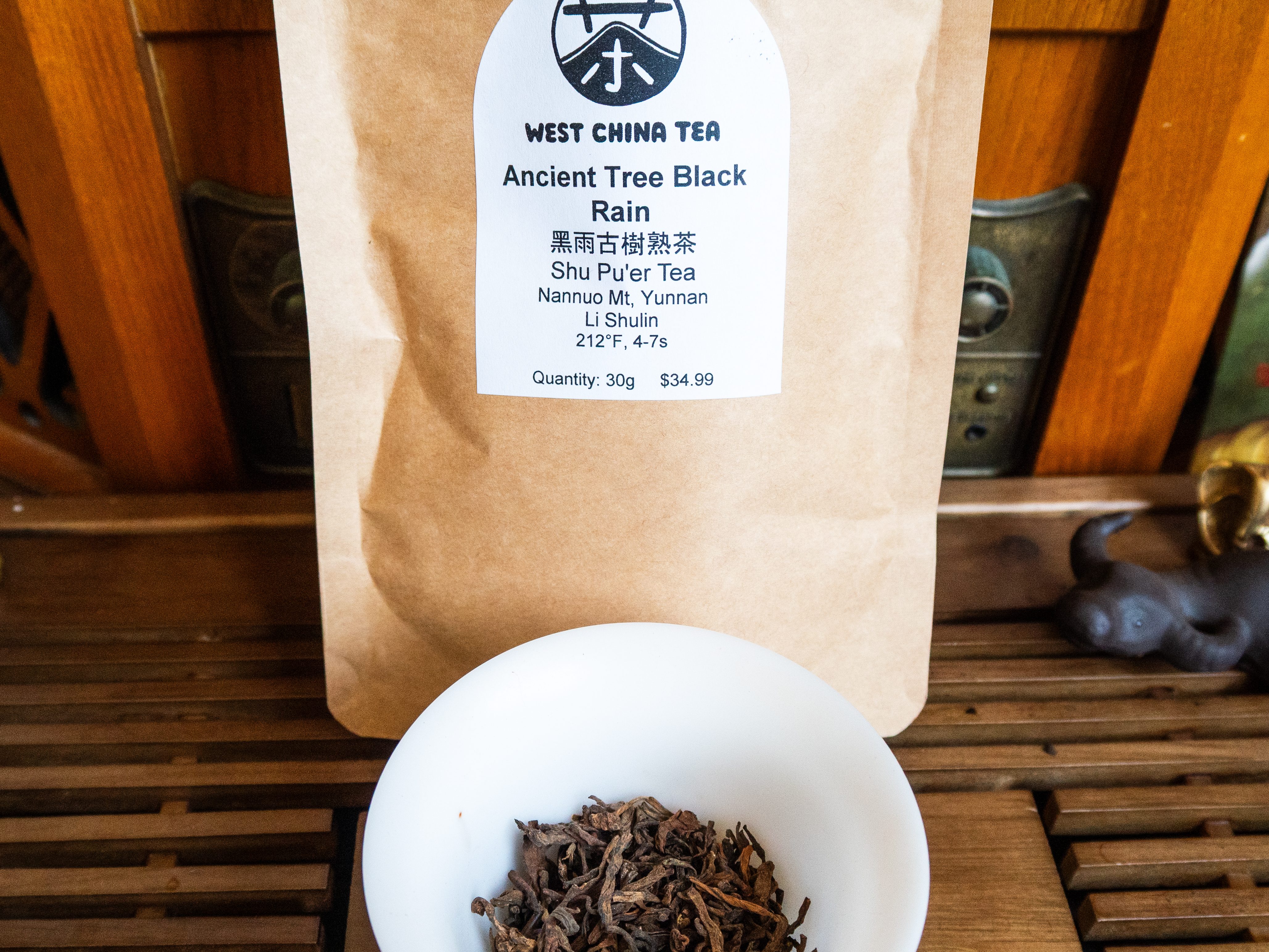
Ancient Tree Black Rain Shu Pu’er Tea Coin (古樹熟幣, Gǔ Shù Shú Bì, “Ancient Tree Ripened Tea Coin”) – This tea is somewhat unique in being a Shu (ripe/cooked/fermented) Pu’er made from Gu Shu (ancient tree) material. Pu’er tea is made from the Big Leaf breed of tea plants native to Yunnan province. These tea plants grow into trees as opposed to bushes and can live for centuries. Tea harvested from ancient trees is especially prized among Pu’er aficionados for its powerful Qi.
(sidenote: they are currently not selling this tea in loose leaf, but only in coin or “toucha” form. So I pulled the description from this page.)
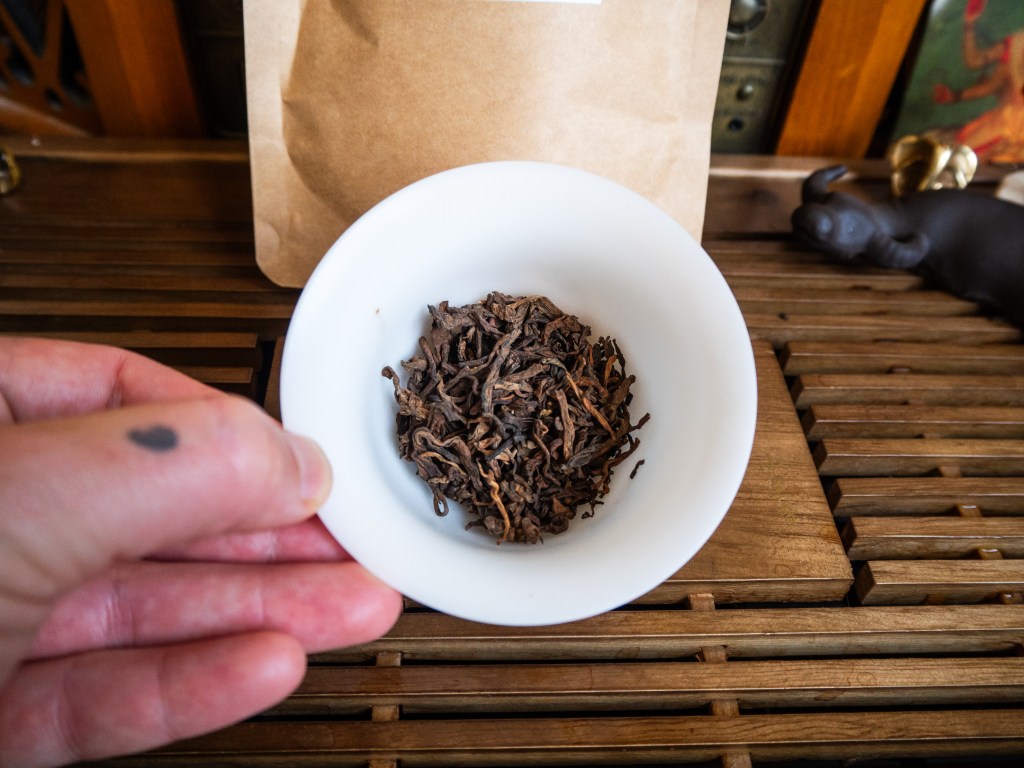
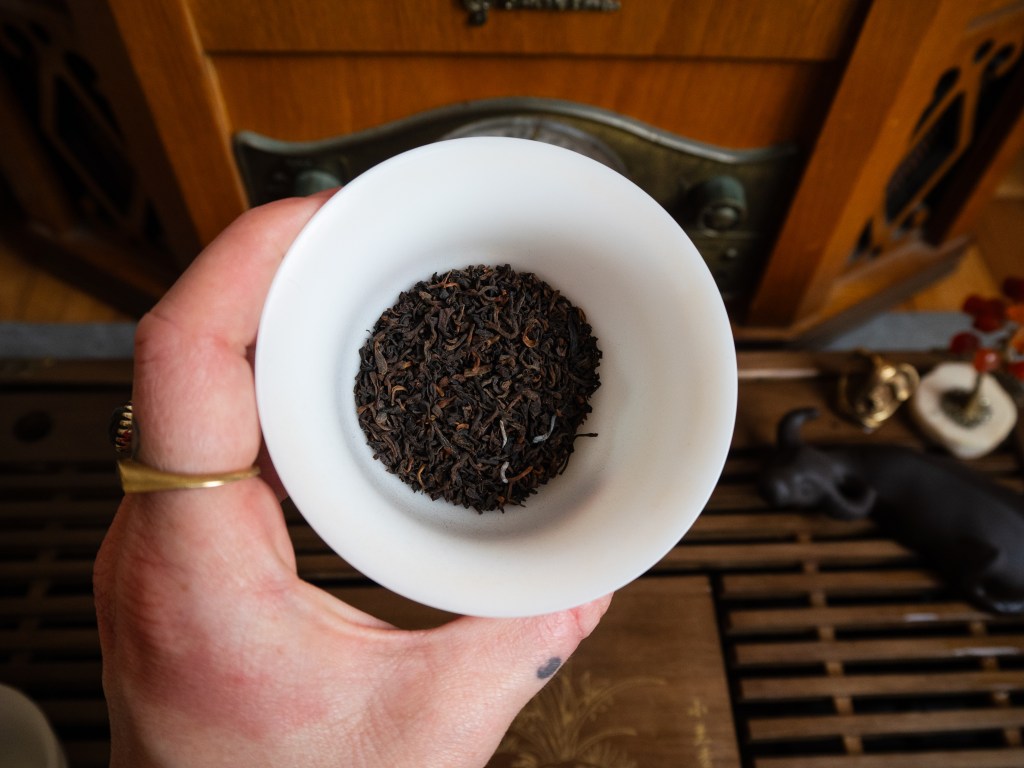
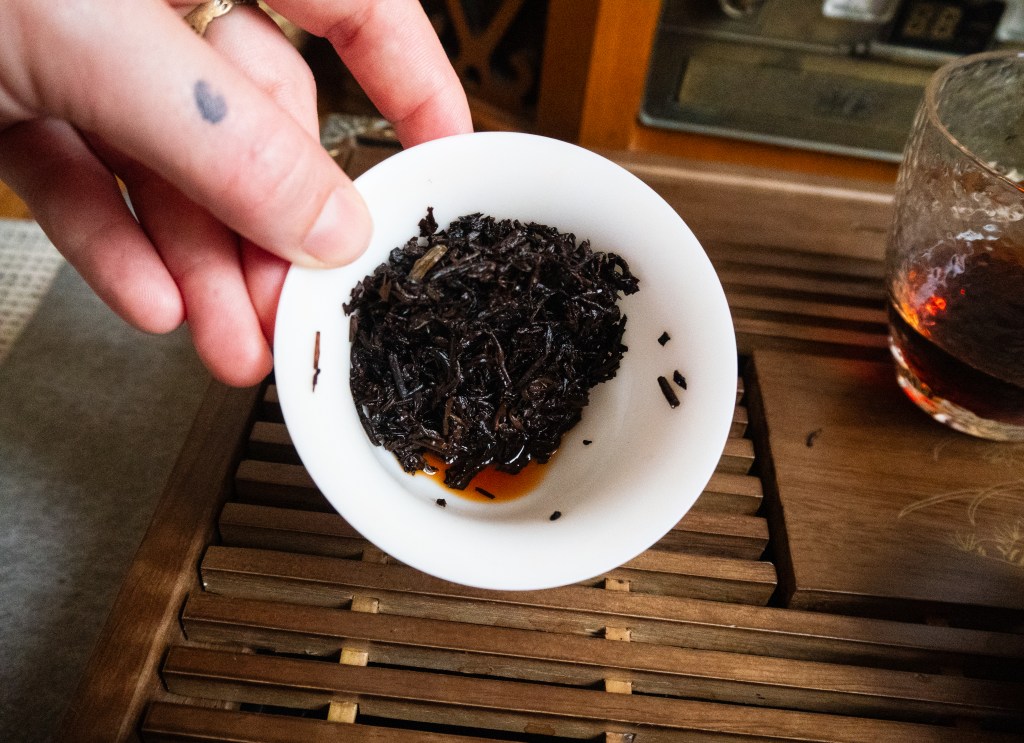
This tea comes with a bit of brown dust on it. All part of the charm!
As the description from West China Tea mentions, it does indeed have powerful Qi.
In my opinion, this is the most impressive element of Ancient Tree Black Rain.
The Qi is something like receiving the darshan of a great great grandmother tree.
It’s a sacred feeling— ethereal, yet rooted.
Fresh, brand new, yet older than time.
Benevolently felt in the crown of the head.
A swampy baptism of light.
Why do I say swampy?
Well, the fragrance smells something like a damp pile of leaves. It’s musky. A bit like decaying bark. A bit like a swamp.
And the flavor reminds me of moss in a wet paper bag with maybe a dried peach. Or like licking a wooden wagon that’s been left out in the rain.
It’s hard to describe, and not exactly my favorite flavor profile for a Puerh tea.
I don’t dislike it, but I couldn’t ever see myself longing for it.
The Qi, on the other hand, is so lovely I feel it is worth a try if you are curious about Ancient Tree leaves.
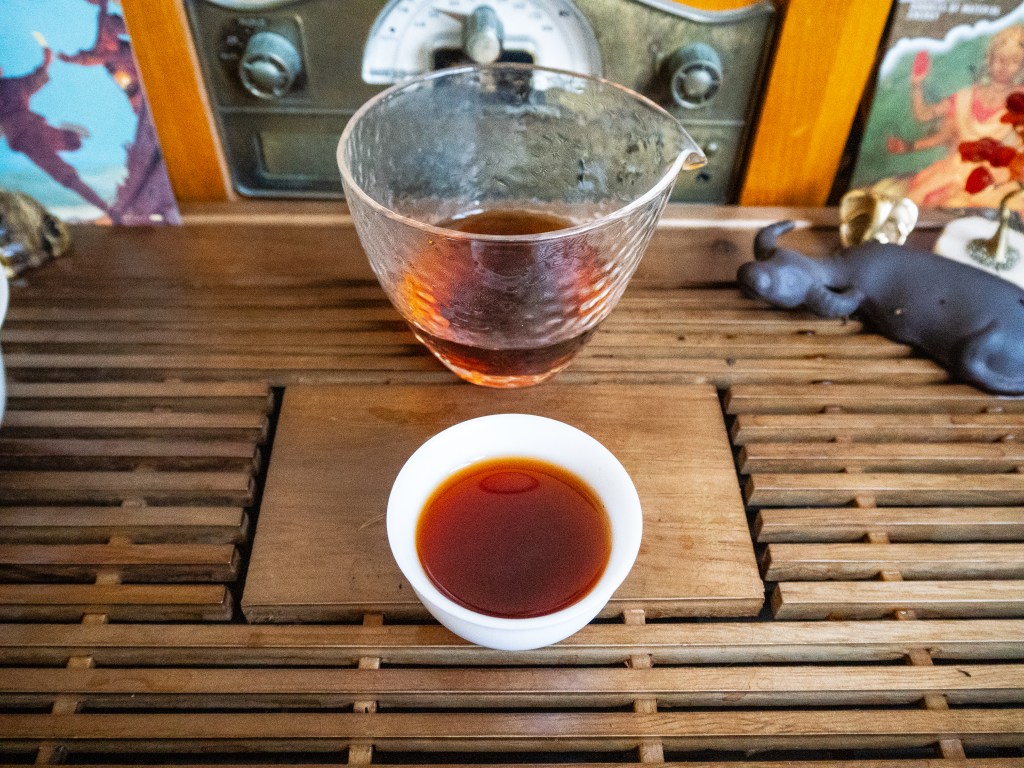
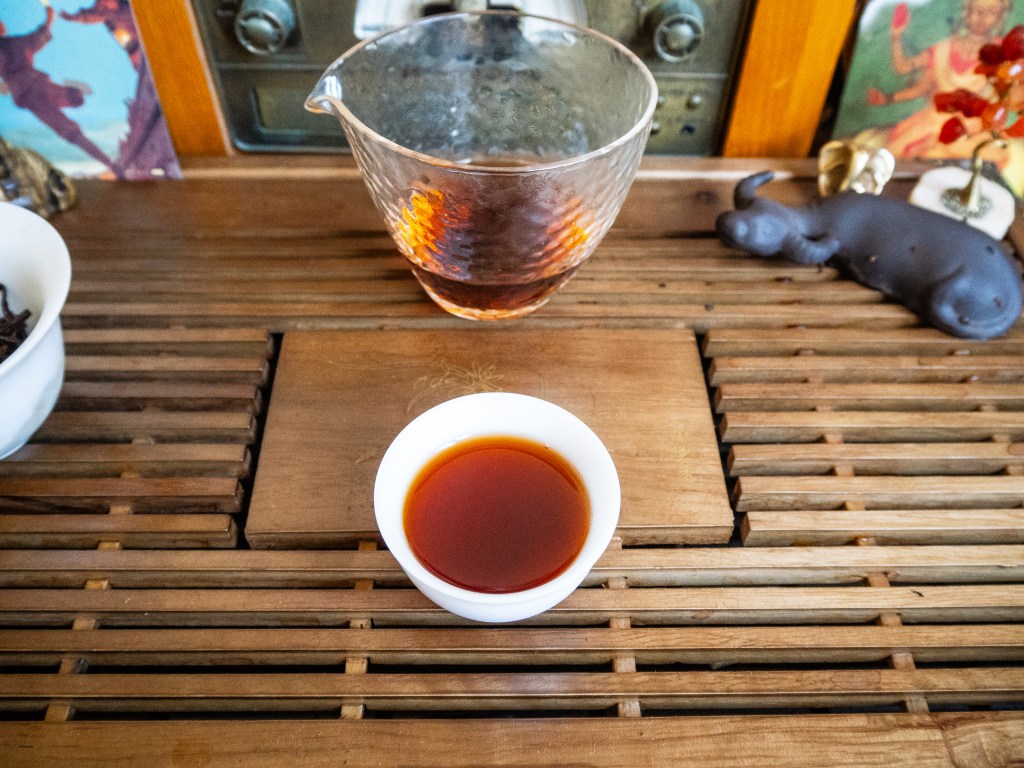
Here is a gallery of the steep breakdown: steeps 1-6.
Not bad! Stays a beautiful, rich mahogany color for at least 6 steeps.
Anyway, in the spirit of Spirit…
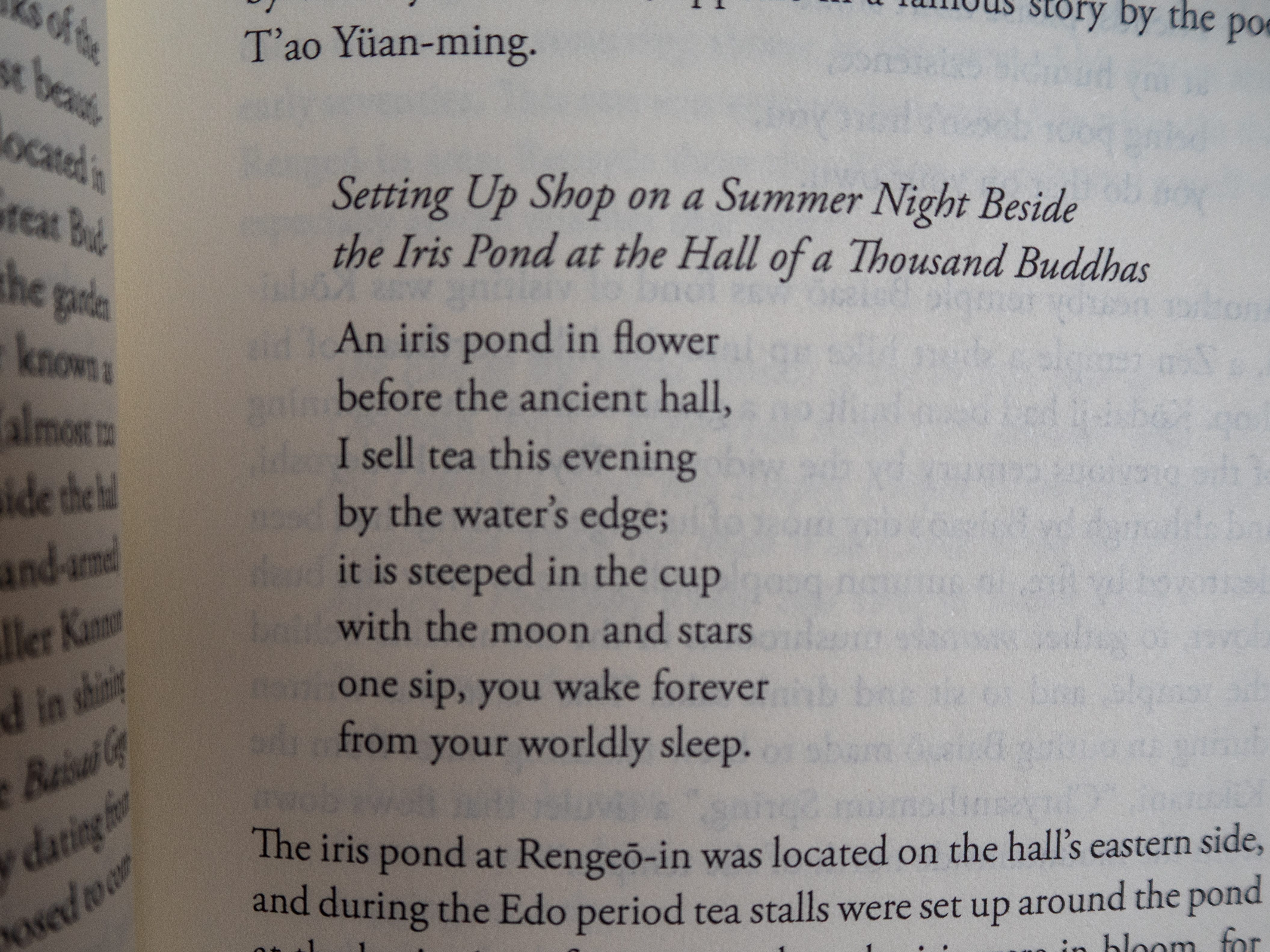
Here is a poem from Bai Sao to ruminate upon. He was an old Chinese monk from the Tang dynasty, living entirely on his earnings from brewing tea from a humble tea cart.
Today we embark on a special journey. A journey of friendship, discovery, and total revelry.
A journey that stirs our souls, and comforts our weary hearts. Today we find refuge at the feet of the Emperor. Today we drink his fine & delicious Puerh Tea.
If you have never had puerh tea, then please click on this link to get a brief overview.
As this is my inaugural post for Tea Voyager, here is a quick summary of what you might expect here:
Reviews! Silly reviews, creative reviews, honest reviews of whatever teas enter my orbit and inspire me to share about them. The idea is to create an enjoyable atmosphere to engage with tea and to invite discussion about other related themes such as ancient wisdom, spirituality, mindfulness, and holistic healing.
I have been imbibing and communing with Chinese tea for the last ten years, ever since I took my first step into theHidden Peakteahouse in Santa Cruz, California. It was love at first sip. But even with 10 years of devoted, daily tea drinking–I know I am only scratching the surface. The Tea-verse is infinite!
I intend to share what I have learned so far, but I also am here to receive whatever new & illuminating knowledge arises from you.
Anyway, let’s get back to Emperor’s Court.
Emperor’s Court is the best friend you didn’t know you needed.
But you do.
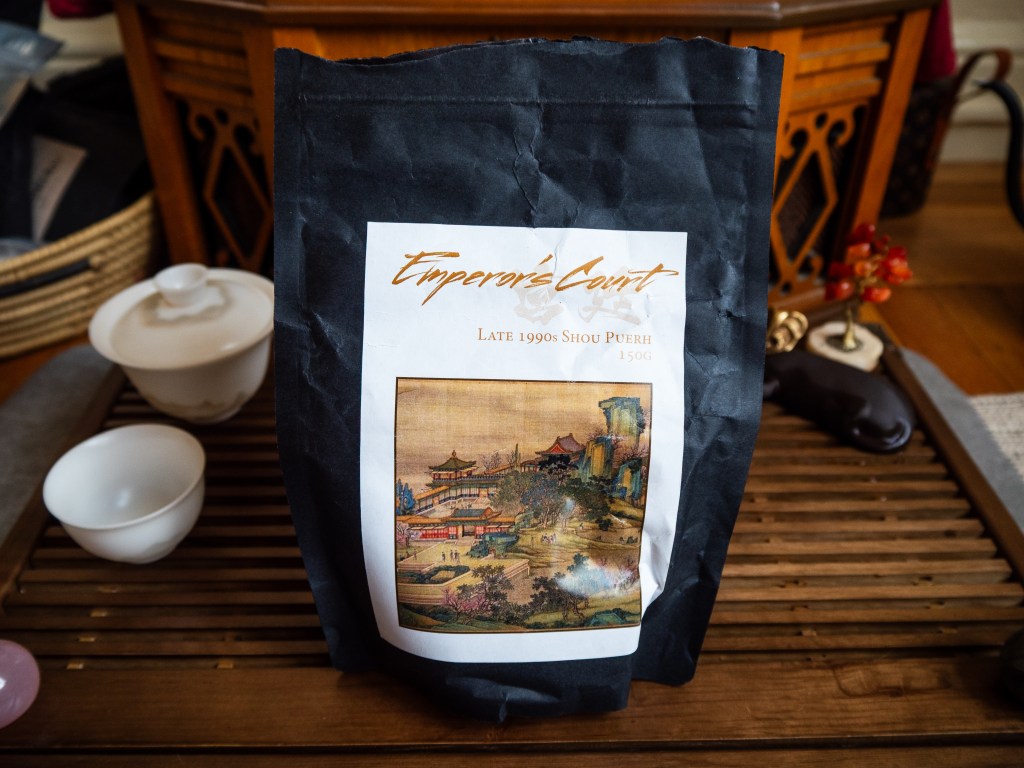
It’s a 1990’s Shou Puerh that I stumbled upon through The Global Tea Hut.
I celebrated my last birthday at one of their tea rooms in Costa Mesa. While browsing the shop in the back I stumbled upon Emperor’s Court. It called to me!
& this tea has been a reliable and continually satisfying friend ever since.
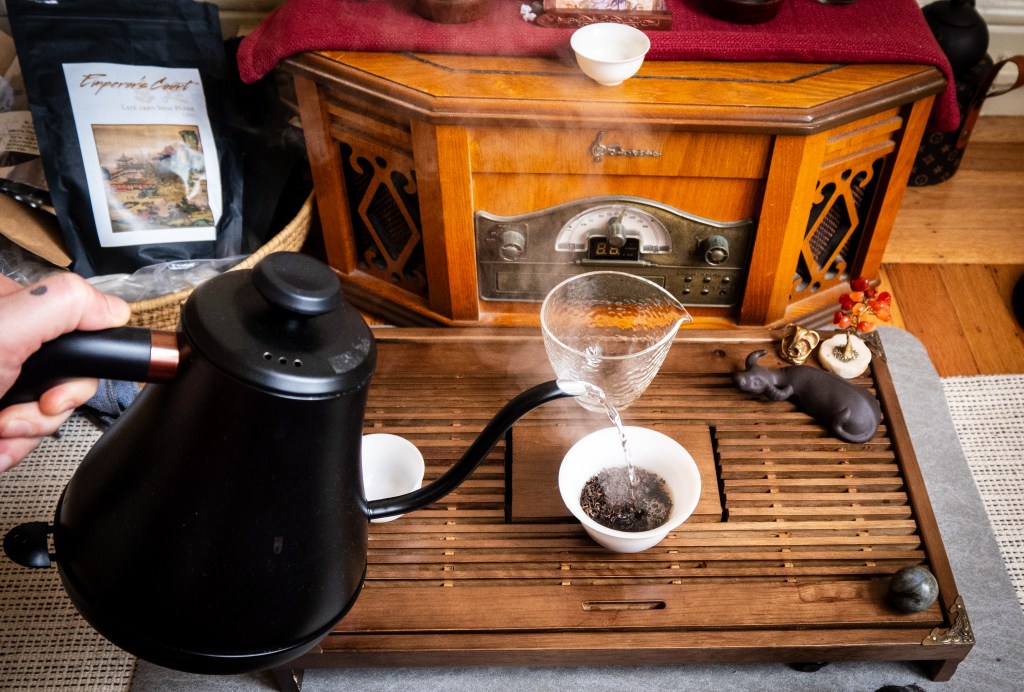
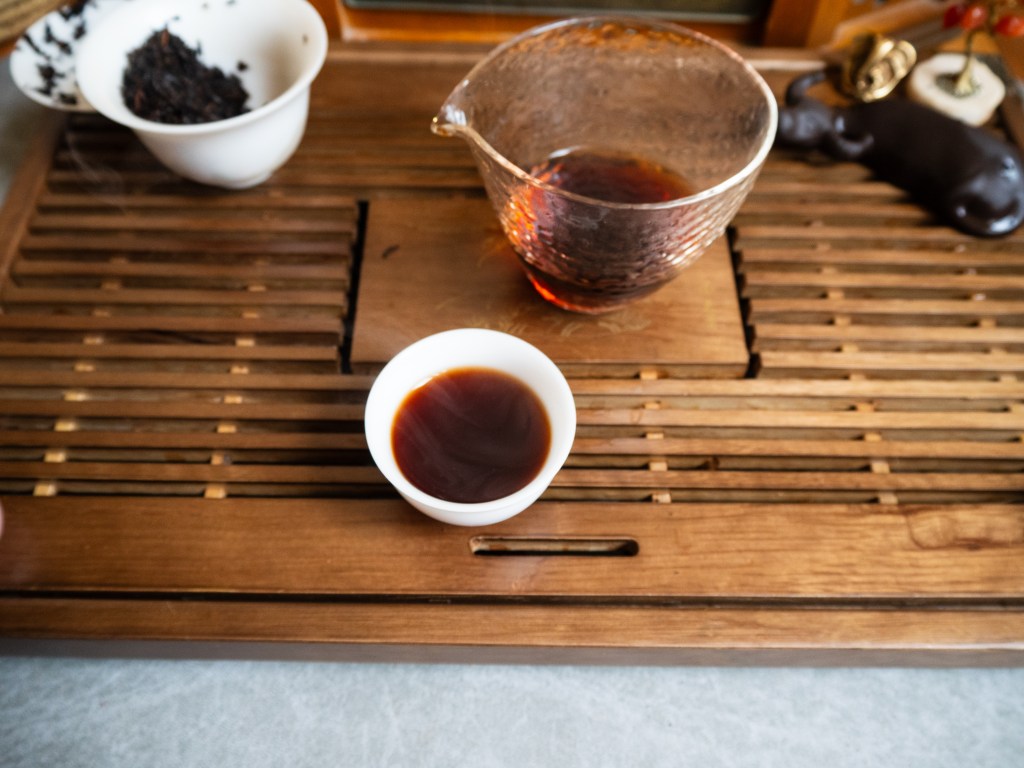
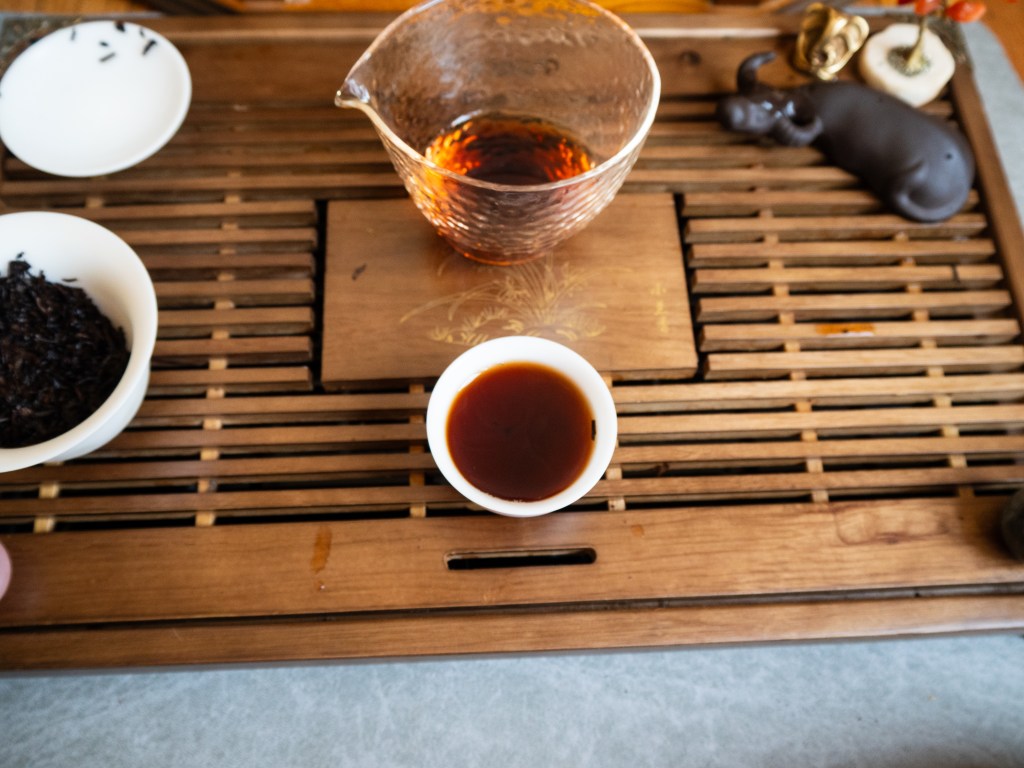
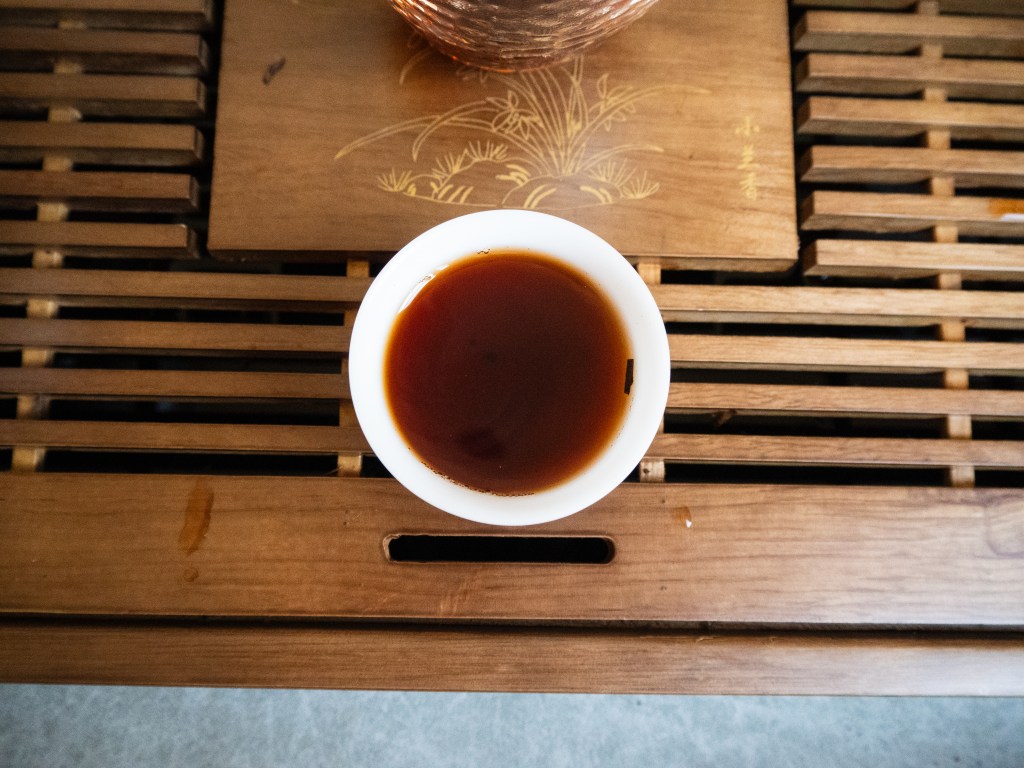
This is an aerial view of my tea tray. You will be seeing this tea tray a lot.
This friend is your friend because it is:
Reasonably affordable ($60 for 150grams)
Generous–stays dark steep after steep!
Mellow–well balanced, no drama, thick and delicious always.
Honestly, I could go on & on. But here are some pictures to give you an idea.
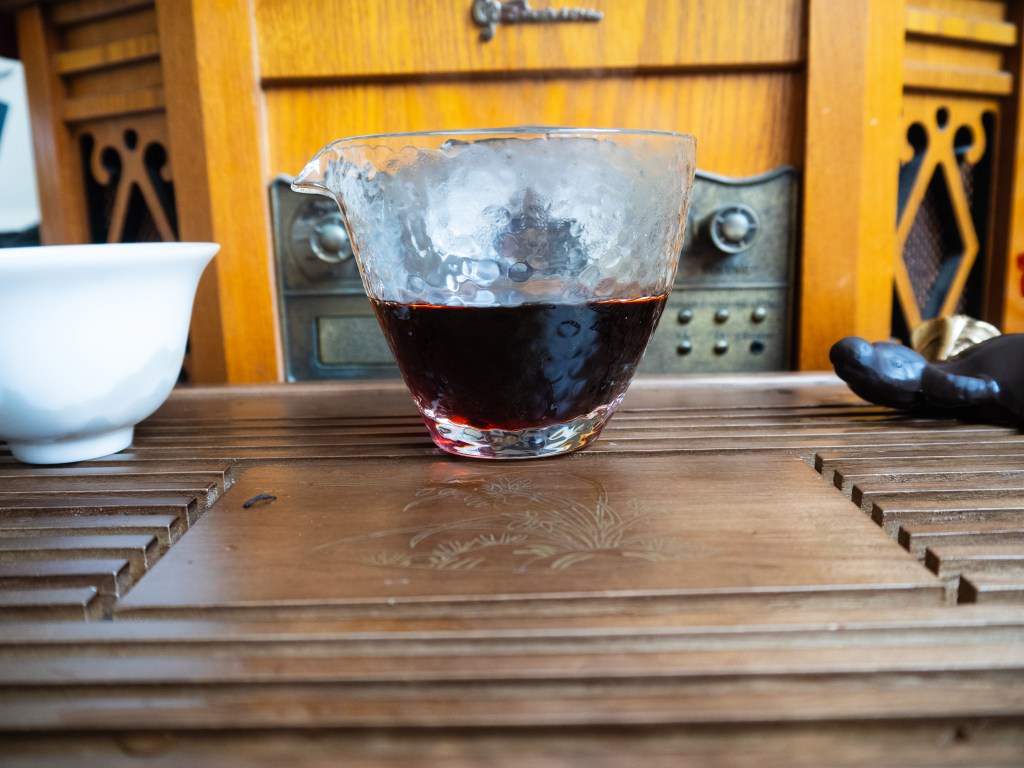
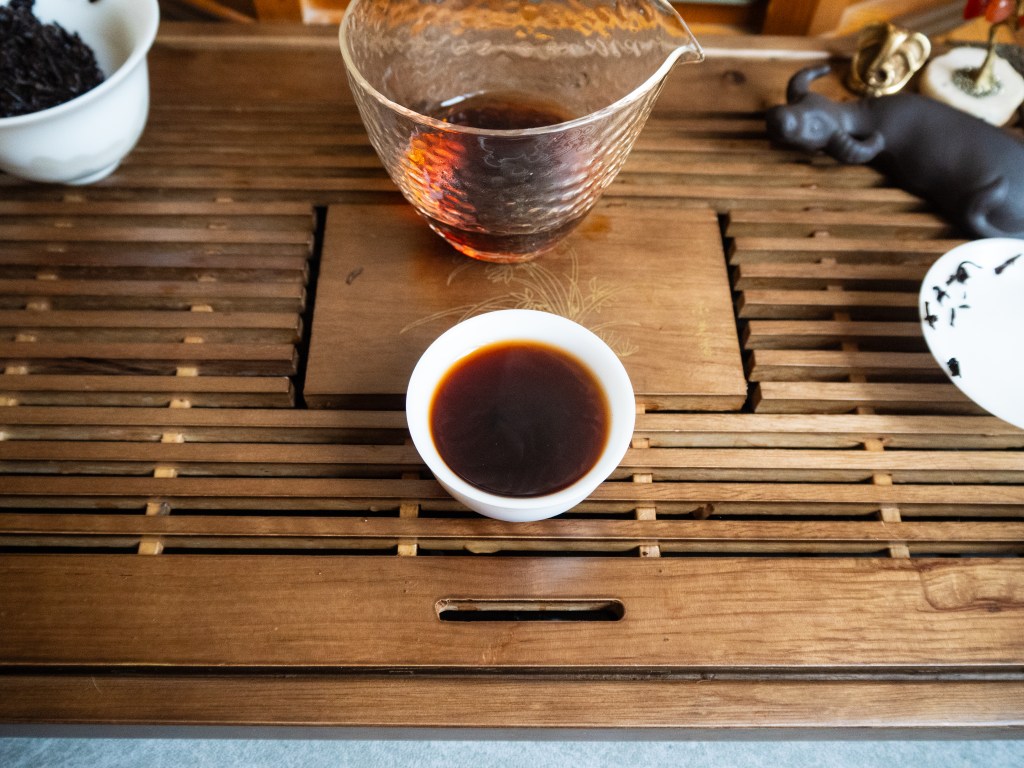
This is the first steep, after the rinse. It is required to rinse the tea leaves in gong fu cha, by steeping them for about 5 seconds or less and discarding the water.
A tea expert once said to me, You wouldn’t eat the foil around a burrito, would you? Then don’t drink the rinse.
He explained to me that the tea plants have a chemical defense mechanism, a bitterness, in order to deter you from consuming them. The first steeping of any tea is infused with this bitter chemical defense mechanism that is meant to keep you away.
But we love when plants play hard to get.
So just dump the rinse (which also removes about 10-20% of the caffeine, so if you’re caffeine averse, try rinsing twice!)
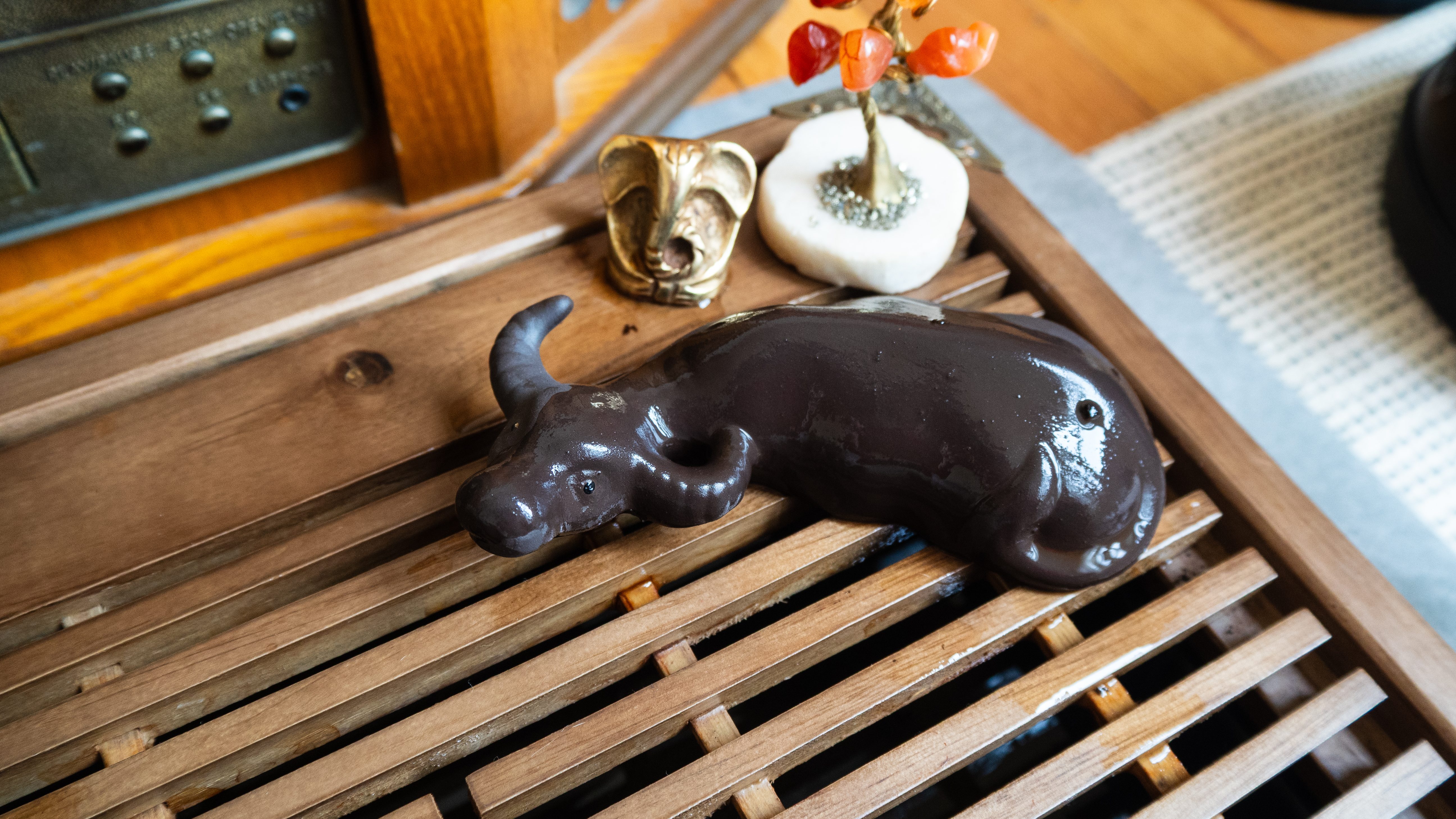
I usually pour the rinse over my tea pet, which I named Mata.
The fragrance of this tea is malty and sweet, like a delicious tree nectar. The sticky sappy essence. But it is not over-sweet. It’s balanced by a gentle earthiness.
This magical tea is called “Gong Ting (宮廷)” shou puerh, which literally translates as “Emperor’s Court.” They say it is named this as it was one of the tribute teas (gong cha, 貢茶) sent to the court from Yunnan in dynastic times.
We aren’t sure exactly how old this tea is, but we know it is from the late 1990s. It is, therefore, an aged shou puerh, from the time when piling was done more skillfully. This means the twenty-something years have done more than mellow this tea out; they have changed it. The storage of this tea is mild, Taiwanese storage. It is not so wet as to greatly speed up the process, or leave strong storage flavors, but wet enough to make the tea taste more aged than it is.
The Emperor’s Court or Gong Ting puerh is sweet and creamy. It is amongst our favorite shou teas, as it is so very sweet and thick. Thickness is, in fact, one of the categories used in the review of shou puerh teas we do for a local Chinese magazine. Good shou should have the consistency of milk. We also use the term “mellow” to describe good shou, which means that you cannot taste the piling flavor (dui wei, 堆味) in the tea. The age of this shou has more than mellowed it out. It is very full-bodied and robust, with many complex flavors. It has a wonderful grounding Qi. This tea is also very warming, which is great if you are in a cold part of the world.
2nd steep!3rd.
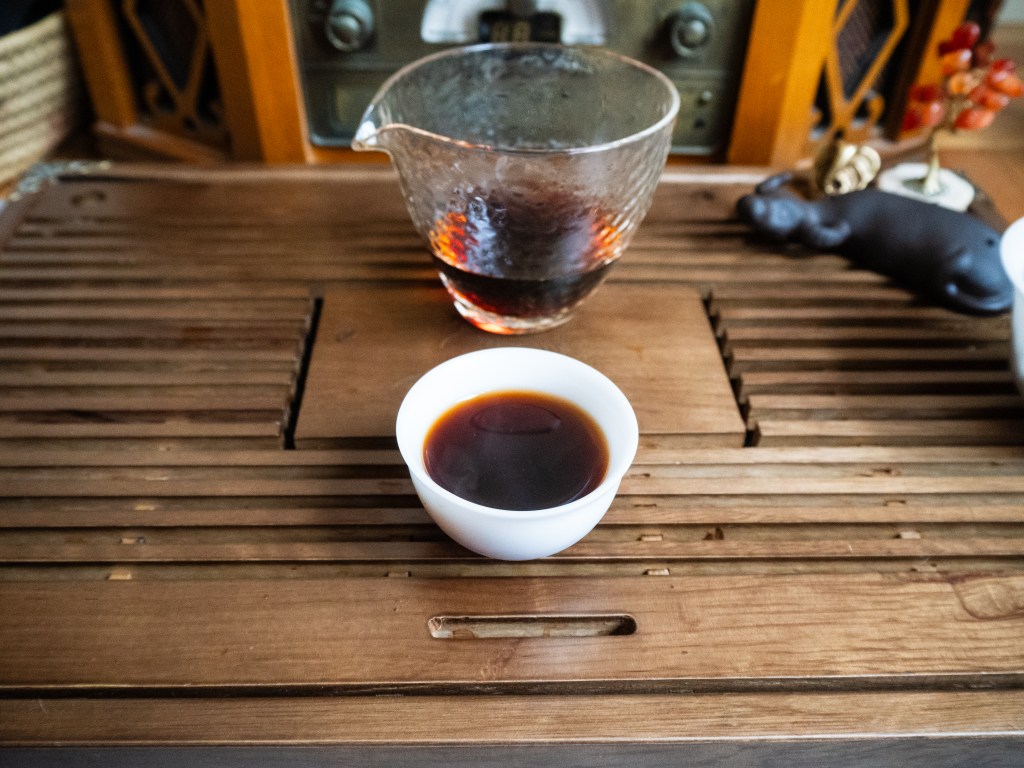
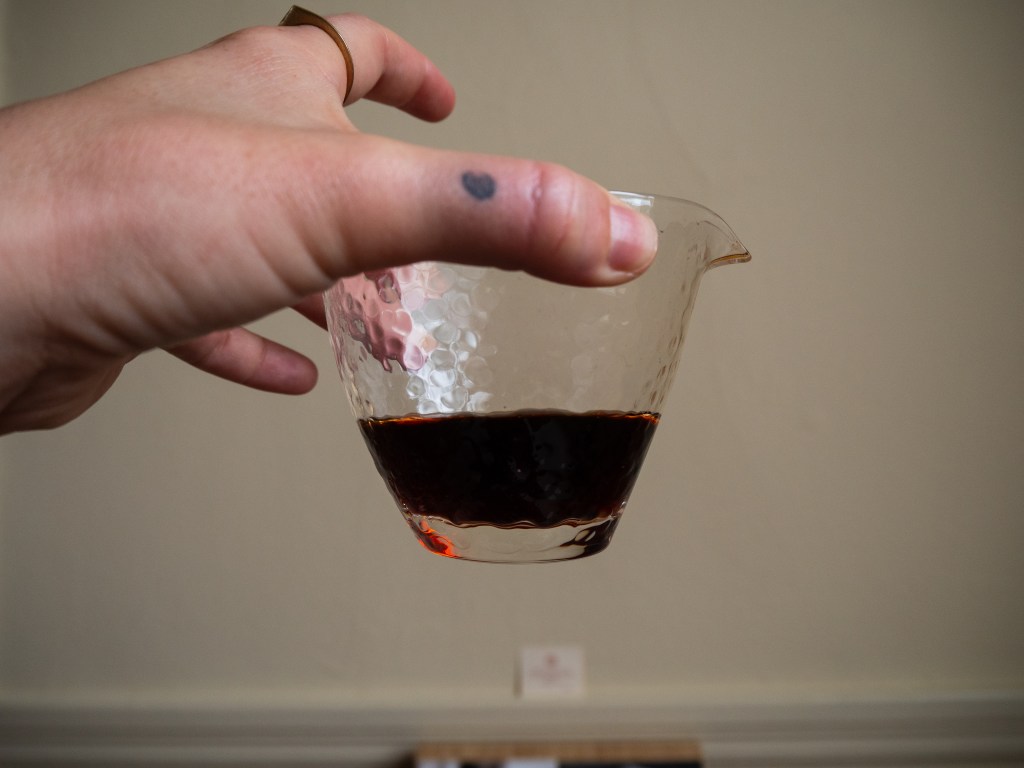
As you can see, it stays thick and dark and rich and creamy.
What more do you want?
This puerh might make a great life partner (marry, in the f*ck/marry//kill game). It’s generous, consistent, deeply satisfying, and it doesn’t break the bank. What a win!
Emperor’s Court is in my daily-drinker category, but not in a boring and monotonous way. In a life-partner way. This might be the tea you want to keep coming home to.
5th Steep! …and still…going!
Another important thing to mention about this tea is its Qi. Qi is the energetic quality of a tea. A much more subtle element of the tea tasting experience, but once you focus in on the energetic qualities it starts to become more obvious.
Emperor’s Court will not crack you out. This Qi is grounding, benevolent, like a warm hug. Yet it raises you up! Gently. Like a mother pushing you on a swing. Your hair is flying in the wind. Your legs are up over your head. Happiness!









 Tea Voyager